Before we move to the actual topic, I would like to give an overview on the different types of learning styles. It’s a task for the teachers’ to bring their learning styles in an interactive way, and here it becomes more difficult to analyse the grasping and absorbing the learning style of students’. When it comes to your child, you prefer the suitable teaching methods, which can be easily transmitted. Children’s are more in favour, to change their learning style as they grow older, so it becomes your responsibility to try various perspectives as time moves. It will be favourable to involve your child or students’ in developing different types of learning strategies. It is recognised and observed by researchers that many students’ or child follow the mix type of learning, some sticks with a single type of learning.
“Learning without obstacle will enlighten your cognizance and tailor your personality”
-Syed Sameena
Some of the schools still stick to their traditional type of learnings, which mainly includes linguistic and logical teaching strategies. They prefer classroom and book-based teaching, which results in repetition, of course content and assessment/exam pressure to augment and assess. Those recommending least used learning styles are labelled or consider as a mediocre teaching and this build up the fortify beliefs of differentiating between “smart” and “dumb”.
You are only aware of only one type of learning styles, but the fact will bring novel innovation in learning strategies. Majorly, learning strategies are divided into three categories:
- Visual Learners
- Auditory Learners
- Kinaesthetic Learners

Visual Learners:
Learners, those who believe and grasp easily, the visible learning, which includes reading, note-making, charts and tables, images and diagrams, and watching demonstrations. They are more in favour of visible features of things. Listening skills are comparatively weak from auditory learners. They avoid listening lengthy explanations and lectures.
Auditory Learners:
Learners like listening more instead of watching and, they prefer speaking and learn by repeating the words loudly. They have a great at memorizing anything and can recall what said by others instead of memorizing their doing and look. They are very rarely distracted by surrounding noise, in fact, they prefer some background musing while learning or working.
Kinaesthetic Learners:
These types of learner believes in practical implementations and they prefer performing, writing, and applying things practically. They appreciate learning individually and observe the application of that object and try to create and develop different strategies to incorporate in learnings, like using different kind of toys and roaming around.
This will definitely help you to analyse your student or children that they fall under which category. Now the learning is not restricted to the four walls of the classrooms and colleges, but rather scattered and diversify its roots into the different learning forms. Nowadays, students’ prefer doing practical, want to perform every course practical, individually to sense the facts by itself.
Learning cannot just happen in the classroom or it will not happen if you want to remember any algebraic term or autobiography of any established author. Learning can happen in a very pragmatic and innovative way, nobody study how to brush teeth, how to walk, how to make friends from your textbooks. These things only happen by doing it practically and of course, outside the classroom.
These learning only happens by when we interact outside with other peoples, when we observe them and their skills, by practically implementing on us what we observed. So, only school and colleges are not responsible for teaching everything. We learn many things from our daily routine, and what we learn on our regular basis, teaches and sharpens our behavioural and critical thinking skills. Learning can be done anywhere and everywhere, as I mentioned earlier the examples of how to brush teeth, etc.
To simplify that, how a student can gain a knowledge and learn in a better way from different resources. On the basis of that, I would like to categorize the beyond classroom teachings into three sections:
- Digital Learning
- Practical Implementation Learning
- Observational Learning
Digital Learning:
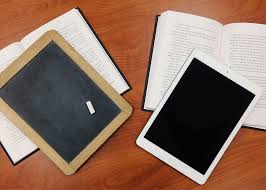
Learning practices using different tools and technology. Now, students are not restricted only to the bookish knowledge, they are curious to acquire knowledge from different resources by using different technology. Replacing traditional educational practices, digital learning grounded it’s affirm root. Digital learning also includes the communication on social network and becomes easier to discuss any projects, assignments, or any agenda, by easily connecting with their classmates, colleagues and their friends.
Digital learning plays a very important role in one’s life. Many schools incorporate into their teaching practices a different technology, tools and software’s, which becomes very interactive and interesting learning. Regularly in classroom students’ are eager to know, with what will be the next new instructional are going to be present by their teachers’.
Digital learning is a novel, a step ahead learning in this era. I would like to congregate some benefits of digital learning in a simple point:
- Smarter perception
- Influenced and Explicable
- Parents’ and teachers’ involvement during operating tools and techniques
- Very swiftly knowledge and information transferred
- Increase in employment via different online resources
- Increase being independent and individuality
Practical Implementation Learning:
Learning when pursue individually and practically are more thorough than learning done by any other strategy. A pain of burn cannot be explained to a child until and unless, it will not experience by itself. So, being in the classroom will not teach you the factual beauty of natures, if you will not experience it by yourself. Teaching strategy should be changed by introducing a real practical in learning.
While teaching any subject, for example, for practical and thorough knowledge of the historical studies school or colleges should organise an outdoor activities, like visiting the relevant museums, exhibitions, historic and heritage places. The experiences of these kind of activities will never be faded out from a child’s memory, it will become an affirm knowledge.
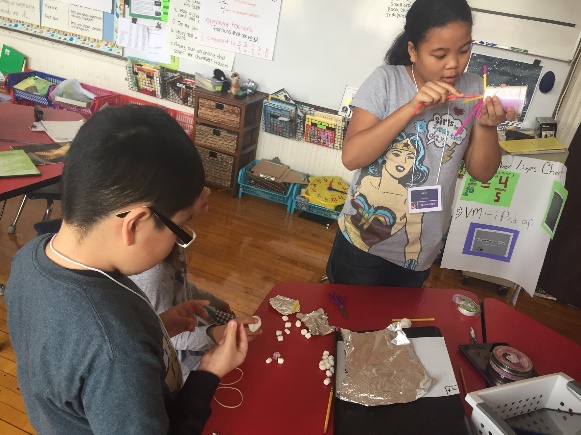
The government is also taking initiative in these kind of learning by providing a fund to the schools and colleges. The student will be able to apply and implement their practical learning into day to day life. I would like to bring in front of you some practical learning benefits:
- Thorough knowledge of any subjects
- Apply their knowledge easily into daily routine
- Become more independent and lack of hesitation, while facing any issues during lectures.
- Enhance and sharpens remembering skills
- Practical knowledge accompanied with theoretical knowledge is strong
Observational Learning:
Learning of this type includes development of soft skills of the students’. This is developed by introducing various kinds of extra-curricular activities or you can say human-interaction. Soft skills like social-interaction, behavioural skills, communication, etc. Though this type of learning itself a very large and critical topic, but in short, learning by imitating and observing others is considered as an observational learning.
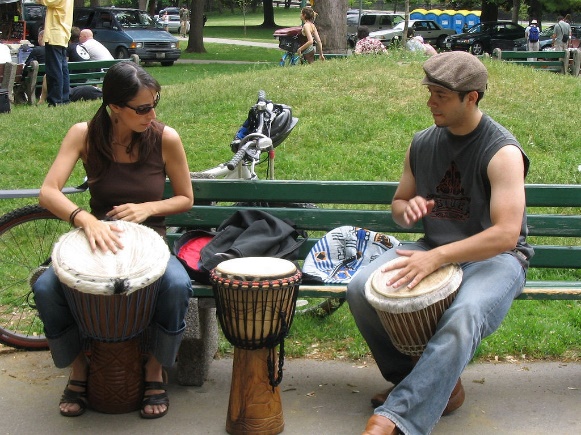
A child from its childhood observe others and try to imitate it, like walking, talking, greeting and many more. A child learns how to talk and respond by observing others, facial expressions and mouth movements also play very crucial role in knowing mood and responding accordingly. So, from a childhood, it becomes the parents’ responsibility to groom beautifully your child by giving a positive environment.
Aggression and jolly nature are developed in children by their childhood and children try to replicate it, in themselves by observing. Social interaction is very important for a child to develop a good communication, how to respond and how to behave in front of whomsoever.
I would like to finish up my article by concluding, that’s how the importance and new strategies of learning should be important for parents’, educators’, and the child itself. These things will decide that with what kind of interpersonal skills child will grow. So, learning and teaching as well, can happen anywhere, it’s not restricted to the classrooms and college.
______________________________________________________________
 Abstract Learning | Adventure